



KitchenAid Artisan Stand Mixer Review: This Is the Only Stand Mixer You’ll Ever Need

Updated: Jun. 30, 2024





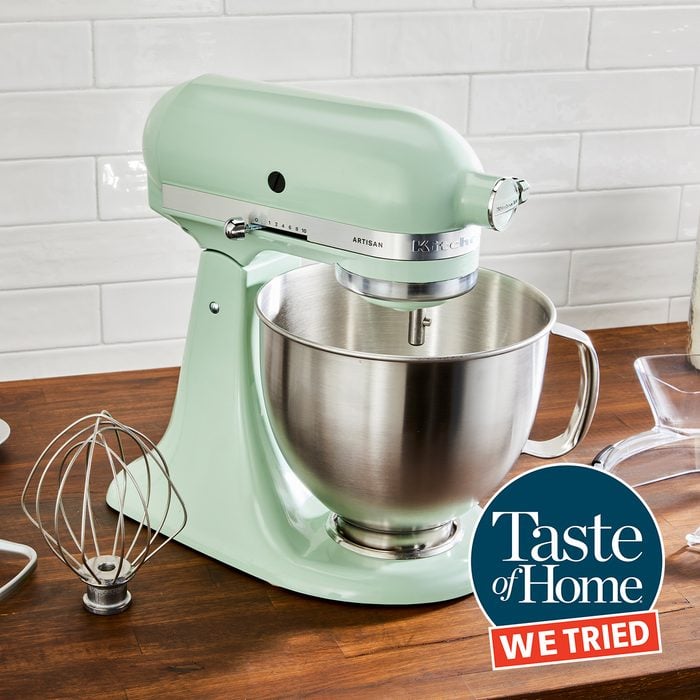
The time-tested KitchenAid stand mixer is a baking staple for a reason. Read up on how it's whipped, stirred and mixed its way to the top over the past century.
Our editors and experts handpick every product we feature. We may earn a commission from your purchases.Learn more.
Little did my Aunt Carol know she was affecting the trajectory of my life when she would invite my childhood self to bake with her. One of my favorite traditions as a kid was whipping up confections in her KitchenAid stand mixer. Together, we’ve produced hundreds of poppyseed loaves, just as many birthday cakes and thousands of cookies.
Now, nearly 35 years later, her KitchenAid stand mixer is still going strong as she makes goodies for her great-nieces and -nephews, and I have a mixer of my own. It was a proud day 17 years ago when I was finally able to afford my beloved tilt-head stand mixer. And I very much intend to use it to make wedding cakes, macarons and more until I’m Aunt Carol’s age.
What is a KitchenAid stand mixer?
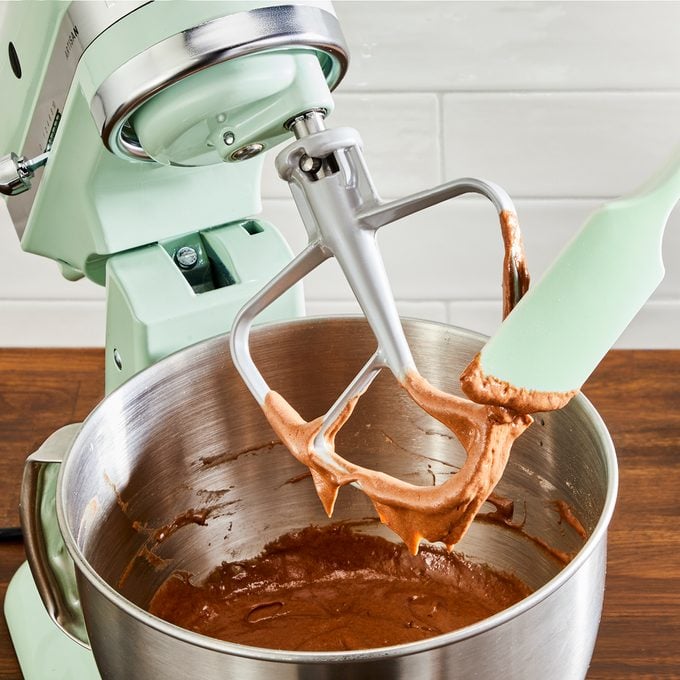
The colorful KitchenAid stand mixer has been a venerated appliance for more than 100 years, as have so many of the company’s other products. They’re heavy-duty, hands-free mixers that allow home cooks more freedom and control during the mixing process—while sparing them some strain too. With both hands available, bakers can employ more precise preparation methods (e.g., alternating the addition of dry and wet ingredients to a cake batter or slowly adding hot sugar syrup to egg whites when making Italian meringue).
Currently, there are three styles of KitchenAid stand mixers from which to choose: tilt-head, bowl-lift and mini. Selecting which model will work the hardest in your kitchen is key.
KitchenAid Artisan Stand Mixer Features
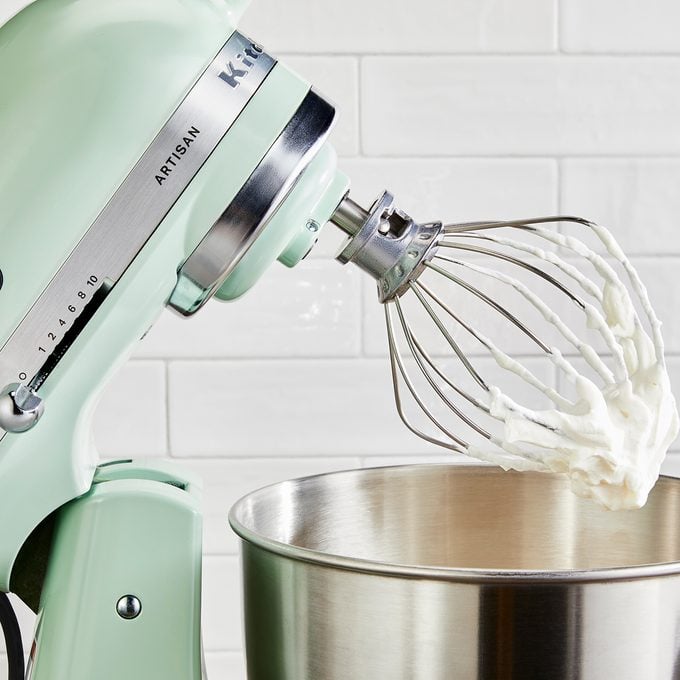
All three types of KitchenAid stand mixers come with a stainless steel mixer bowl (the capacity of which depends on the model), dough hook, wire whip, flat beater and pouring shield. So, it’s safe to say these mixers can do a heck of a lot more than your hand-held beaters. Plus, there’s increased precision. Each KitchenAid stand mixer has 10 speeds so you can whip, mix or knead your ingredients just so.
The stand mixers don’t stop at sweets. Each model features a multi-purpose attachment hub fit for apparatuses that can process vegetables, form fresh pasta or grind meat. There are 10 of these smart attachments, sold separately, and KitchenAid is always developing and launching more awesome options.
Beyond the working capabilities of the mixers, KitchenAid boasts an impressive selection of colors (the tilt-head line includes the most hues), so home cooks can select the best color for their space and personal style.
Finally, KitchenAid backs up its products with a respectable warranty, so you can purchase with assurance. Now let’s explore the differences among the models.
Tilt-Head
The iconic tilt-head model is the most popular—and for a reason. This model, with a top portion that hinges backward, allows users to change the mixer’s accessories (i.e., the whip, beater and hook) and remove the bowl easily. The tilt-head model has a slightly smaller footprint than the bowl-lift model but is still powerful enough to knead bread dough.
Bowl-Lift
The bowl-lift model costs the same as the tilt-head one but is best for hardcore bakers and cooks because the mixer’s powerful motor readily handles dense batters and thick bread doughs. Plus, it technically has an eleventh half-speed for folding. The bowl-lift mixer boasts the largest capacity of up to seven quarts, and it’s fitted with arms that raise the stainless steel bowl into the air.
Mini
The newest addition to the KitchenAid family is the mini stand mixer. This bite-sized stand mixer, which also has the tilt-head feature, is perfect for those with a compact kitchen. The mini model is smaller and weighs less, yet it still offers the benefits and functionality of its larger counterparts. Its size would certainly complement KitchenAid’s cordless appliances.
How We Tested It
Over the past few years, the Test Kitchen has performed two stand mixer tests, including brands such as Breville, Wolf Gourmet, Beautiful by Drew Barrymore and, of course, KitchenAid. The stand mixers came in a variety of price points and degrees of quality. The least-expensive models cost around $100, and the top-dollar ones were more than $1000.
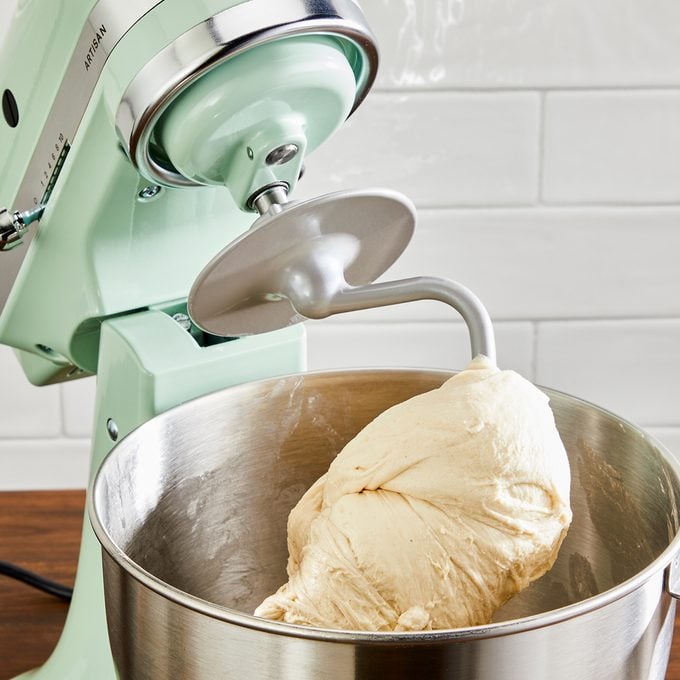
When personally testing, I utilized each brand’s machine for several days and performed a controlled set of functions, including whisking egg whites and kneading bread dough. I used only the attachments included with the purchase of each mixer.
Pros
- Brand recognition
- Three models, including tilt-head, bowl-lift and mini
- Included whip, beater, bread hook and pouring shield
- Versatile attachments (sold separately)
- Fun color choices
- Solid warranty
- Large capacity
- 10 mixing speeds
Cons
- Heavy and hard to move, particularly bowl-lift and tilt-head models
- Large footprint for a countertop appliance
- High price point
FAQ
Is it worth getting a KitchenAid mixer?
KitchenAid’s tilt-head model consistently received top grades. The familiar adage ‘you get what you pay for’ is certainly true in this case; several of the less-expensive brands simply could not keep up with the outstanding performance and versatility of the KitchenAid brand. Shop KitchenAid sales!
What Other Reviewers Had to Say
Home cooks like you love the KitchenAid stand mixer just as much as the professionals in our Test Kitchen. See for yourself!
Pmedic, one of the more than 28,000 five-star reviewers, says, “This is my second stand mixer. My first lasted 20+ years and literally changed how I make everything! I will continue purchasing KitchenAid products. The attachments are well worth it also.”
Like me, user Lucy L. has been baking with a KitchenAid stand mixer, which she received as a wedding gift, for decades and with no complaints. “I’ve had my tilt-head KitchenAid for 37 years, and it works great!” she says. “I also have a bowl-lift (only for 20 years). As a home baker, they’re essential!”
Mable23, on the other hand, is a new customer, and she’s loving discovering all the baking (and cooking) burdens that her KitchenAid stand mixer alleviates. “My husband got me this almost a month ago now,” she says. “Homemade brownies [are] done and in the pan within 10 minutes. I make bread super easily without hurting my hands from kneading. Shredding chicken is done in a few minutes and [doesn’t hurt] my arthritic-like wrists.”
Product Comparison
Although there are several worthwhile stand mixers on the market, KitchenAid consistently remains among the best, with thousands of consumer reviews to support this claim. Other brands’ stand mixers often perform a number of functions as well as KitchenAid’s does, but they rarely perform all of KitchenAid’s functions or with the same competency. When you combine the history, performance, longevity, functionality and consumer satisfaction of KitchenAid stand mixers, the winner is clear.
Final Verdict
Because I have decades of experience using the KitchenAid stand mixer, I can confidently say that this brand stands up to the test of time. Not only that but there’s the benefit of additional functions and accessories too. (Psst! Organize your KitchenAid attachments with this Amazon product.)
I’ve even put the warranty to the test when I once had my tilt-head model repaired at no cost to me. For those of us who love to create food at home, despite the price, the KitchenAid stand mixer is a must-have.
Where to Buy a KitchenAid Stand Mixer
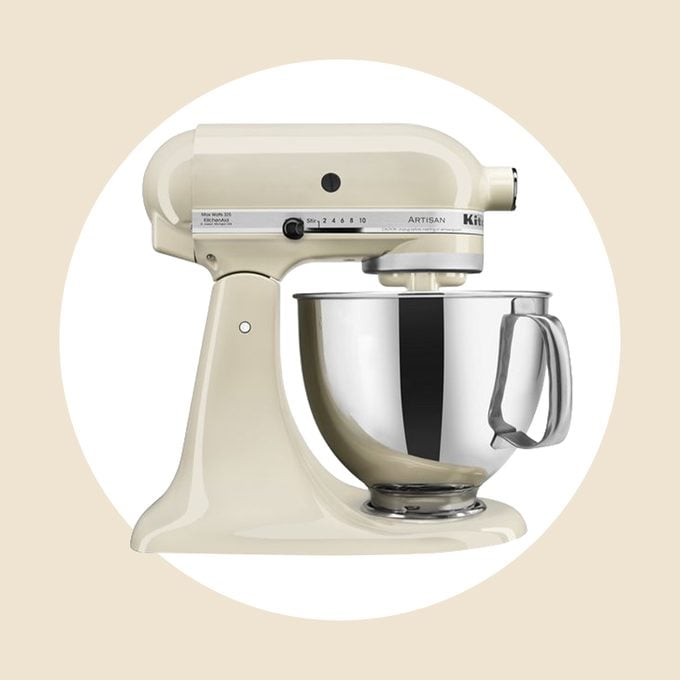
The KitchenAid site offers the most options when it comes to the brand’s stand mixers, including up-to-date color choices and personalized features. There, you’ll find the standard 5-quart tilt-head and 5.5-quart bowl-lift models for $450 and the mini 3.5-quart model for $380.
However, for roughly the same price, you can also find the baking staple at Amazon, Williams Sonoma and Costco. Say goodbye to the elbow grease of hand-mixing and hello to your new workhorse of a KitchenAid!
Originally Published: July 24, 2023


